
Reviewed · TOURS IN GRAN CANARIA
Gran Canaria historical house with mango plantation
A 200-year-old farmhouse, a cactus garden, a working mango farm and a local vermouth tasting all fit into this two-hour visit near Mogán. The setting is the real draw: traditional Canarian buildings sit among native plants above the valley, giving you a quick look at rural life alongside a taste of what the farm produces today.
I like the contrast between the restored farmhouse and its gardens and the farm’s own vermouth and mango dessert. You get more than a tasting room visit: the guide connects the plants and fruit to local food, then gives you a chance to sample the results.
One point to weigh is the walk down to the mango plantation. That route is not suitable for people with mobility impairments or baby carriages, even though the activity is otherwise described as wheelchair accessible.
What makes this Mogán visit distinctive
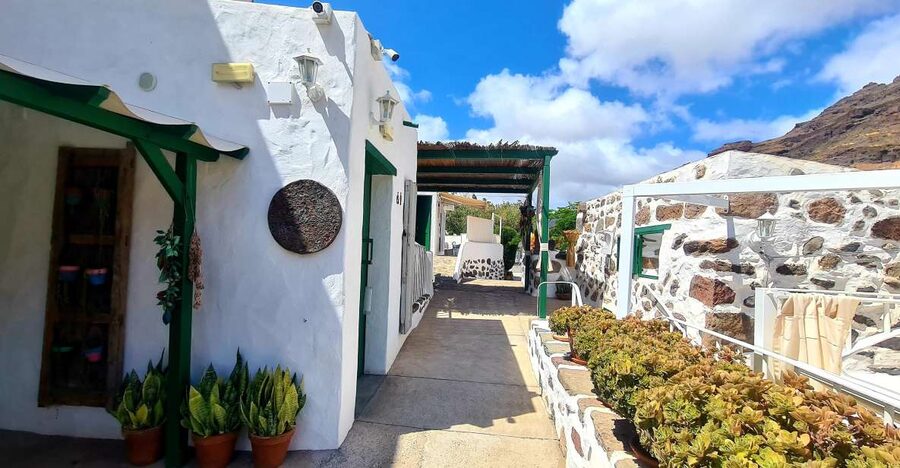
- A restored 200-year-old farmhouse: See a cluster of small buildings restored in the style of popular Canarian architecture.
- A cactus garden with walking trails: Take in a range of cactus varieties and native vegetation in the grounds.
- Fruit growing on the farm: Learn about mangoes, avocados and soursops, plus the edible cactus known as tunera.
- A local vermouth stop: Taste red and white Lolito, made on the farm and described as Gran Canaria’s first vermouth.
- A mango dessert with a local name: Try Gazpachuelo de mango, a cold mango and yogurt soup with chocolate cubes.
- A small group and guide: Groups are limited to 10, with tours offered in English, Spanish and Russian.
A farmhouse with a valley setting
The visit starts near Pueblo de Mogán, at the parking area for Valle de Mogán restaurant on Los Pasitos, 2. Look for the guide in a black jacket. The activity returns to the same meeting point, so you do not need to arrange a separate pickup or return transfer.
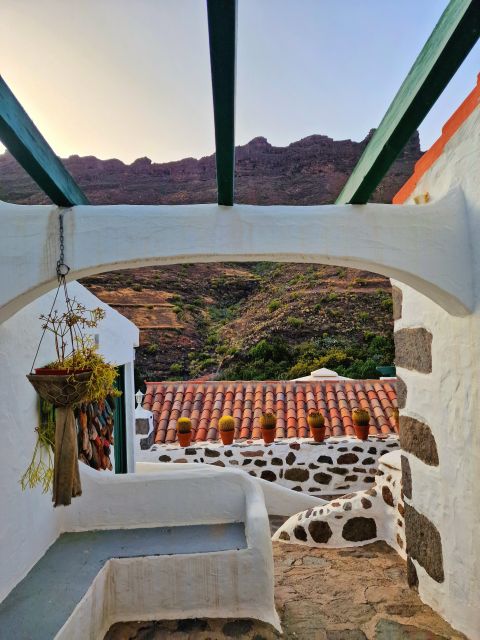
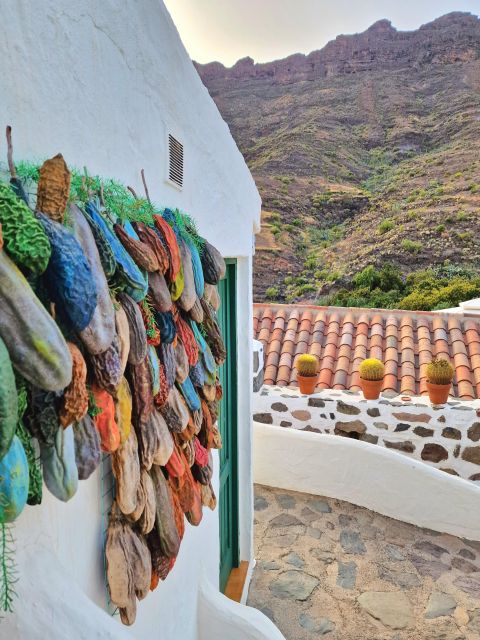
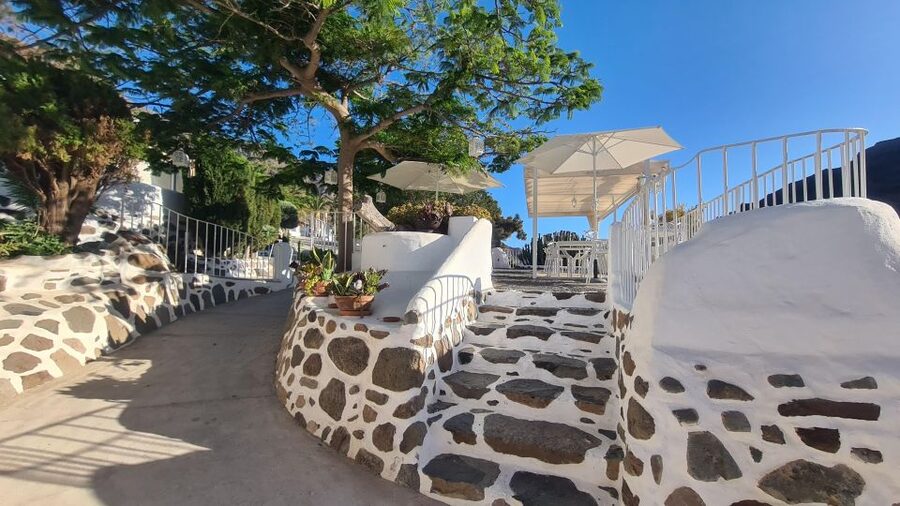
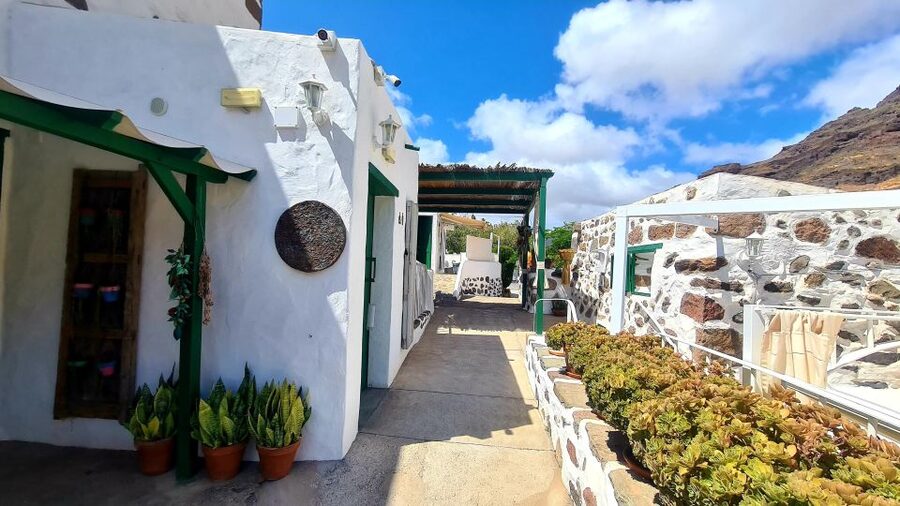
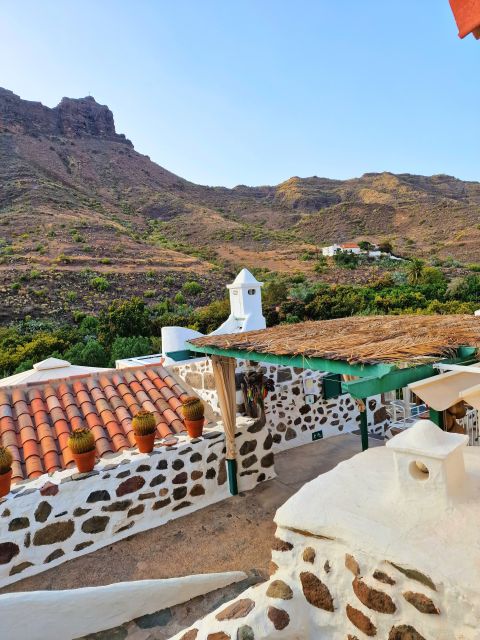
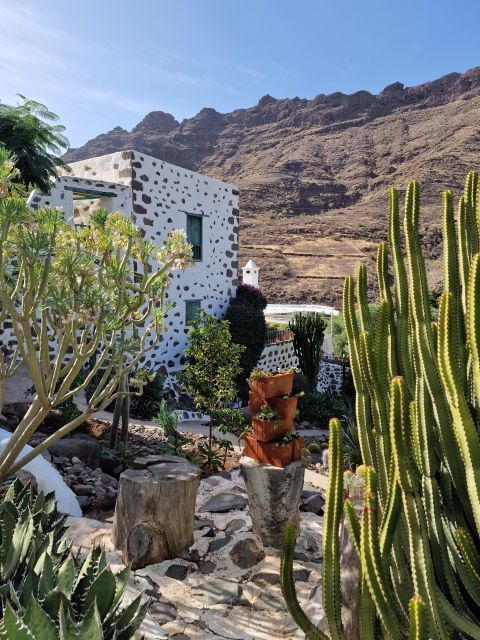
The farmhouse is a complex of small buildings around 200 years old, restored to follow traditional Canarian architectural forms. That makes the first part of the visit more than a quick photo stop. You can see the shape and arrangement of a rural property, while your guide explains its history and the place it holds in the local setting.
The farm’s position, surrounded by native vegetation and overlooking the Mogán valley, adds much of the charm. The views help you understand why this is a very different outing from a town-center tasting. You are visiting a place where farming, architecture and scenery belong together.
Guides associated with this experience include Katarina, also spelled Katrina, and Tatiana. The guiding style has been described as welcoming and informative, and the house’s history is one of the most appealing parts of the visit. The group limit of 10 should help keep the explanation personal, though the exact guide depends on the date and language you select.
Other things people book around Gran Canaria:
- Poema del Mar Skip-the-Line Ticket
★ 4.8 · 3,856 reviews - Puerto de Mogán: Submarine Tour
★ 4.4 · 3,792 reviews - Maspalomas: Guided Camel Ride in the Maspalomas Sand Dunes
★ 4.4 · 3,690 reviews
Following the cactus garden paths
The grounds include a cactus garden with picturesque trails and a wide variety of plants. It is a gentle way to begin looking closely at the farm’s vegetation before moving on to the crops. If you enjoy gardens, this stop gives the tour a little breathing room between the farmhouse history and the food-focused part.
The garden is also a useful reminder that the farm is not only about mangoes. Cactus, including tunera, has a place in Canarian cuisine, and the guide explains how local plants and fruit are used. You will get a practical introduction rather than a full botany lesson, so treat the garden as a scenic, food-minded stroll.
The 75-minute Mogán portion includes the farmhouse, garden and farm visit, along with time for photos and views. That is a generous share of the two-hour schedule, but you should still expect the guide to keep the group moving. If you prefer a long, unhurried garden visit, this compact tour may feel brisk.
Seeing mangoes, avocados and soursops growing
The next part takes you to the fruit-growing area, where you can see mangoes, avocados and soursops on the farm. The guide explains how these fruits are used in Canarian cooking, along with cactus. That context makes the tasting more meaningful: you have seen the produce in its growing setting before trying a dessert made with mango.
The walk down to the plantation is the tour’s main practical limitation. The route is specifically not suitable for baby carriages or people with mobility impairments. The activity is also listed as unsuitable for people with heart problems or high blood pressure, and for people over 95. If any of those apply, check with the provider before booking rather than relying on the general wheelchair-accessible label.
That accessibility information needs a little care. The tour is described as wheelchair accessible overall, but the path down to the mango plantation is not suitable for people with mobility impairments. If you use a wheelchair or have difficulty walking, ask exactly which parts you can access and whether the plantation portion can be skipped. The supplied details do not say whether an alternative route or arrangement is available.
Tasting Lolito vermouth and mango dessert
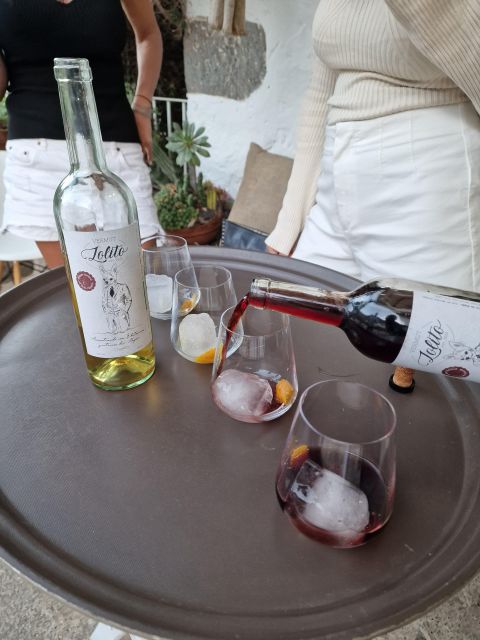
The final stop is the farm’s vermouth factory, where the tasting lasts about 30 minutes. You get both red and white Lolito vermouth, made on the property and described as the first vermouth produced in Gran Canaria. The two styles give you a chance to compare rather than simply sample one glass and move on.
The tasting is paired with Gazpachuelo de mango, a cold soup made with mango and yogurt and finished with chocolate cubes. It is an unusual combination, and the name may bring gazpacho to mind, but the description here is a chilled mango dessert. This is where the visit ties together farming and local production in a way a standard winery stop cannot.
Water is included. Alcohol is central to the tasting, but there is one encouraging detail for families: a nonalcoholic drink was specially made for a 13-year-old on one visit. That does not mean a substitute is guaranteed each time, so contact the provider in advance if you need a nonalcoholic option.
Same island, a different kind of day:
- Guided tour of the Banana World
★ 5.0 · 3,431 reviews - From Puerto Rico de Gran Canaria: Dolphin Watching Cruise
★ 4.3 · 2,520 reviews - Gran Canaria: Dolphin and Whale Watching Cruise
★ 4.3 · 1,855 reviews - Gran Canaria Guided Buggy Tour
★ 4.7 · 1,743 reviews
Is two hours enough time?
The stated duration is two hours, with 75 minutes for the Mogán visit and 30 minutes for the vermouth and food tasting. The remaining time allows for the transitions between the stops. It is a compact outing, not a half-day farm visit, which makes it easy to fit into a schedule if you are already spending time in the area.
That short format is a plus if you want a guided introduction without giving up most of your day. It also means you should arrive ready to start and follow the group’s pace. Starting times vary, so check availability for your date rather than assuming a fixed departure.
The tour is a small-group activity capped at 10 participants, with a live guide in English, Spanish or Russian. A small group is useful here because the experience depends on explanation: the house’s story, the plants and how the farm’s fruit is used. It also makes it easier to ask a question during the tasting.
What the $63 price covers
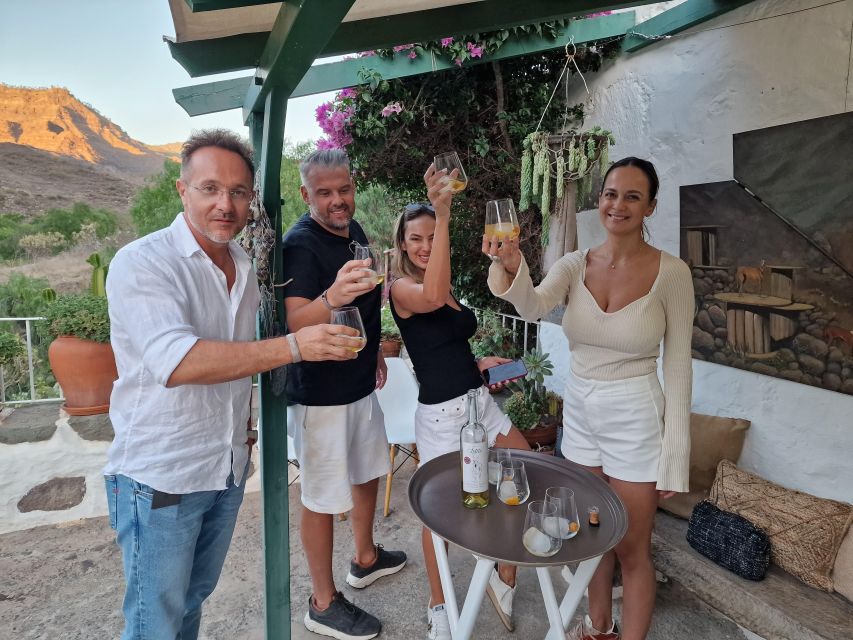
At $63 per person, the price includes a guide, water, the red and white vermouth tasting, and the mango dessert. You are also paying for access to a restored farmhouse, the cactus garden and the fruit-growing area, all within one short visit. For someone interested in local agriculture and food as much as architecture, that combination gives the price a clear purpose.
The cost is less compelling if you mainly want a drink tasting. You can make the most of it by taking in the farmhouse and garden, asking how the fruit is used in Canarian cooking, and treating the vermouth and dessert as the final chapter rather than the whole event.
Lunch or dinner at Valle de Mogán restaurant is optional and costs extra. It is presented as a way to extend the food experience with local dishes made from fresh ingredients, but it is not part of the standard package. If you are considering a meal, budget for it separately and check the restaurant’s arrangements directly.
Hotel pickup and drop-off are not included. You need to reach the meeting point yourself, at the Valle de Mogán restaurant parking area, and return there at the end. That is straightforward if you are already nearby, but less convenient if you are relying on hotel transport.
Who will enjoy this farm visit?
I would choose this tour if you want an outing that joins local food with a sense of place. It suits curious eaters, garden lovers and anyone who wants to see more than a tasting counter. The restored house, native plants and crops give the vermouth and dessert a clear connection to the farm around them.
It can also work for families, especially if a teenager is interested in trying the dessert or learning how fruit grows. The tour includes alcohol, however, and the nonalcoholic drink offered to one young participant should not be treated as a standard inclusion. Ask ahead if that matters to your plans.
This is not the right choice for someone who needs an accessible route all the way through the plantation, wants hotel transport, or hopes to spend a long time at each stop. The walk down to the mango farm is the key limitation. For everyone else, it is a focused way to combine rural architecture, plants and local flavors in one small-group visit.
Should you book the Mogán farmhouse tour?
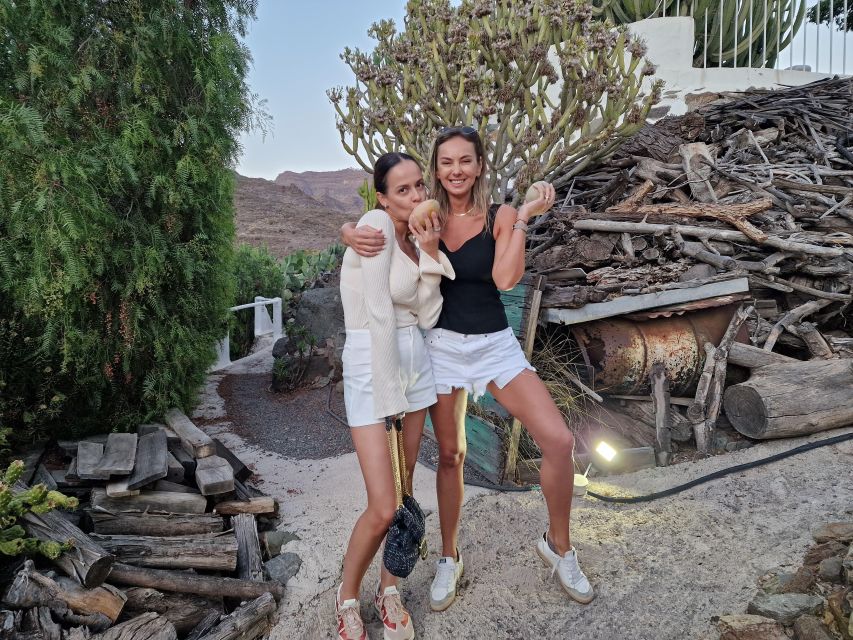
Book it if the thought of seeing a traditional Canarian farmhouse and tasting farm-made vermouth sounds more appealing than spending two hours on a conventional sightseeing circuit. The mix of architecture, cactus, fruit trees and a distinctly local mango dessert makes the outing specific to this corner of Gran Canaria.
Before you reserve, check the walking access for your group and confirm any dietary or nonalcoholic needs with the provider. At $63, the tour offers good value when you want the guided context as well as the tasting. If you only want vermouth, or need a fully accessible plantation route, look elsewhere.
FAQ
How long does the tour last?
The tour lasts two hours. The Mogán visit is listed as 75 minutes, followed by a 30-minute vermouth and food tasting.
Where is the meeting point?
Meet in the parking area of Valle de Mogán restaurant at Los Pasitos, 2. The guide will be wearing a black jacket.
Does the tour return to the same place?
Yes. The activity ends back at the meeting point.
What languages are available?
The live guide is available in English, Spanish and Russian. Check availability when selecting a time.
What is included in the price?
The included items are a guide, water, tasting of red and white Lolito vermouth, and Gazpachuelo de mango dessert.
Is lunch or dinner included?
No. Lunch or dinner at Valle de Mogán restaurant is optional and costs extra.
Is hotel pickup included?
No. Hotel pickup and drop-off are not included, so you need to make your own way to the meeting point.
Is the route suitable for wheelchairs or baby carriages?
The activity is described as wheelchair accessible, but the route down to the mango plantation is not suitable for people with mobility impairments or baby carriages. Confirm access for your specific needs before booking.
Can children have a nonalcoholic drink?
A nonalcoholic drink was specially prepared for a 13-year-old on one occasion, but it is not listed as a standard inclusion. Contact the provider to ask if one can be arranged for your visit.
Just added around Gran Canaria
- Gourmet Tapas and Wine Tour in the Old Town of Las Palmas★ 4.5 · 12 reviews
- Gastronomic Bike Tour through Las Palmas at Night★ 5.0 · 3 reviews
- Arround Gran Canaria All Highlights Private Shore Excursion★ 5.0 · 11 reviews
- Full Private Tour of Gran Canaria with Natural Pools★ 5.0 · 11 reviews
- Full day Hiking and Waterfalls Experience★ 5.0 · 38 reviews
- Fun Pack Water Sports★ 5.0 · 10 reviews
- e-Scooter or e-Bike Maspalomas Tour+Visit Western Town Sioux City★ 5.0 · 5 reviews
- Tour to Guayadeque, Firgas, Fataga – VIP★ 5.0 · 4 reviews
Tours in Gran Canaria, compared.


Maspalomas: Guided Camel Ride in the Maspalomas Sand Dunes
Read our review →

From Puerto Rico de Gran Canaria: Dolphin Watching Cruise
Read our review →

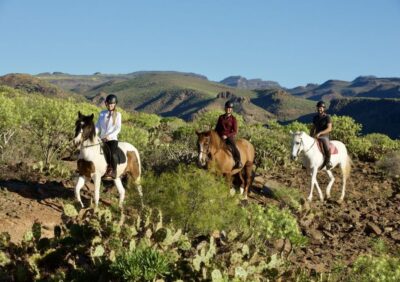
El Salobre: Horse Riding Adventure with Transfer Options
Read our review →Browse the lists this tour appears in